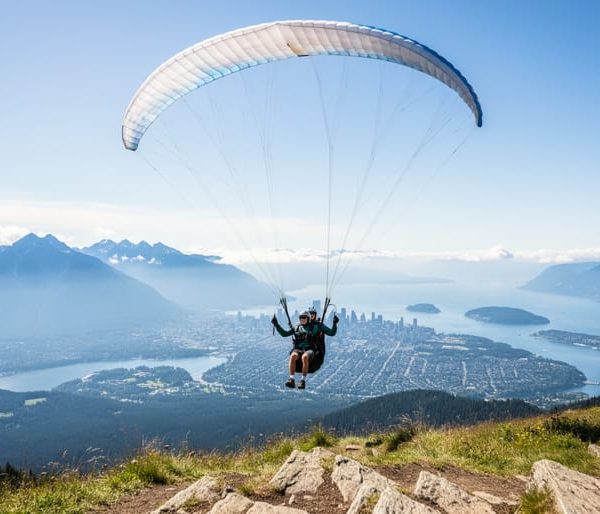
Vancouver offers some of North America’s most accessible paragliding, with tandem flights launching from Grouse Mountain at $269 per person and no prior experience required. You’ll find launch sites scattered across the Lower Mainland and Fraser Valley, each providing different wind conditions and flight profiles. Whether you’re booking your first tandem ride or exploring the region’s thermal corridors, the infrastructure here makes it remarkably easy to get airborne.
The geography matters here. Mountains rise sharply from sea level, coastal winds collide with valley thermals, and sites stretch from Grouse Mountain through the Fraser Valley to Pemberton. The West Coast Soaring Club supports flying locations throughout this corridor, giving pilots a range of conditions and challenges. For first-timers, that variety translates into choice: you can start with a straightforward tandem flight or commit to the ground school that teaches you how weather, wind, and terrain interact before you ever leave the launch point.
What sets Vancouver apart is the combination of urban proximity and genuine mountain flying. You’re not driving hours to reach launch sites, and the tandem operations handle logistics from equipment to safety briefings. The community is active, the sites are well-documented, and the learning curve starts exactly where you are.
Why Paraglide in Vancouver
Vancouver’s paragliding scene offers a rare combination that draws both first-timers and experienced pilots: true mountain-to-valley flying minutes from a major city. The Coast Mountains rise directly from sea level, creating terrain where you can launch from alpine zones and potentially glide down through multiple elevation bands to valley floors. That vertical drop, paired with coastal air movement, generates the lift that keeps flights aloft, not just brief hops, but sustained ridge and thermal soaring.
The geography matters because it delivers variety. Lower Mainland sites near the city give accessible launch points for learning and weekday flying. Push east into the Fraser Valley or north toward Pemberton, and the terrain opens into longer ridge systems and bigger mountain faces. You’re not stuck with one site or one style of flying; the Vancouver network spans beginner-friendly slopes to technical alpine launches within an hour or two of downtown.
Accessibility sets the area apart. Grouse Mountain runs commercial tandem flights that require zero experience, you show up, go through Ground School covering launch technique and basic meteorology, and fly with an instructor. It’s a legitimate introduction to the sport, not a gimmick. Beyond tandems, West Coast Soaring Club supports sites across the Lower Mainland, Fraser Valley, and up to Pemberton, meaning you can connect with local pilots and build progression from first flight to solo certification without leaving the region.

Top Paragliding Sites and Areas Near Vancouver
1. Grouse Mountain (North Vancouver)
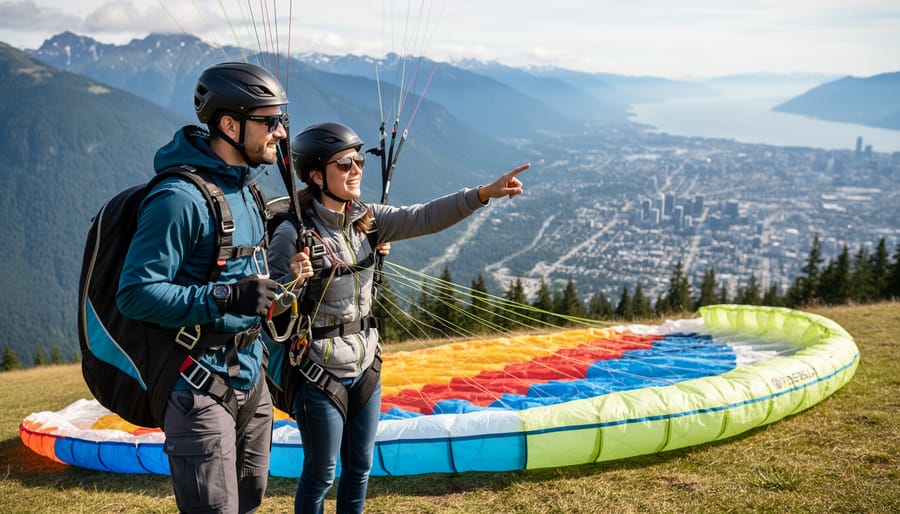
Grouse Mountain offers the most straightforward entry point for first-time paragliders in the Vancouver area. The operation runs from the Peak Chair summit, where you’ll launch with a certified tandem instructor after a brief ground session. No prior experience is required, and the entire process, from check-in to landing, takes about three hours.
You’ll begin at Guest Services in the main lodge, where you need to check in at least 1.5 hours before your scheduled flight time. Anyone under 19 must have a parent or guardian sign the Release of Liability Waiver. From there, you’ll ride the Peak Chair to the launch zone, arriving at least 30 minutes before your flight slot.
Ground School happens at the launch site and covers four core topics: launch technique (how you’ll run into the takeoff), glider construction (the anatomy of the wing above you), basic meteorology (air movement and pressure), and the weather conditions needed for safe flight. This isn’t a full introductory tandem instruction course that certifies you to fly solo, but it gives you enough understanding to participate actively in your flight rather than just hang on.
The actual launch is the moment most beginners worry about. Your instructor will clip you into the harness, brief you on the three-step run you’ll make together, and count down. You run forward until the wing lifts you off the slope, usually within five to seven steps. From there, you’re airborne over the North Shore mountains, with the instructor controlling the glider while you take in the view.
Pricing sits at $269 per person, which does not include Mountain Admission (you’ll pay that separately at the base). Weather cancellations are common, especially with coastal fog or unstable winds, so book with schedule flexibility if possible.
2. Fraser Valley Sites
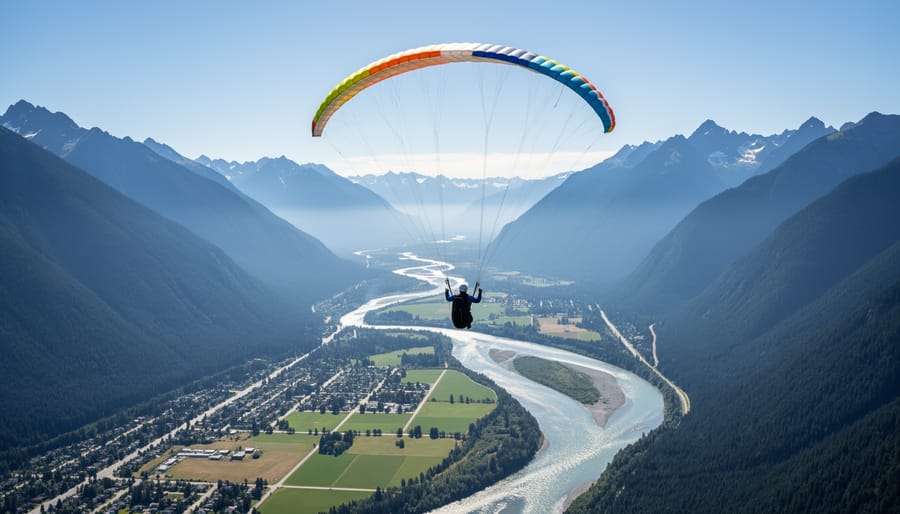
The Fraser Valley corridor opens up terrain that intermediate pilots can explore once they’ve built foundational skills. West Coast Soaring Club supports multiple launch sites throughout this region, creating opportunities for longer ridge flights and cross-country progression beyond the introductory tandem experience at Grouse.
The valley’s geography creates consistent ridge lift along mountain flanks, allowing pilots to extend their airtime and work on technique. Flights can follow the valley terrain, reading wind patterns and thermal activity that develop throughout the day. The landscape shifts from urban proximity near the Lower Mainland to broader agricultural valleys as you move eastward, each section offering different flight characteristics.
What makes Fraser Valley appealing is the variety of launch elevations and aspects. Some sites face south and west, catching afternoon thermals, while others offer ridge soaring in prevailing winds. Pilots can choose routes based on daily conditions, wind direction, and their skill level. The terrain supports both high flights and lower glides closer to valley floors.
Access to these sites typically requires club membership or connection with experienced local pilots who know launch protocols and landing zones. West Coast Soaring Club coordinates site information, conditions updates, and mentorship for those moving beyond tandem flights. This isn’t beginner territory, it’s where you apply what you’ve learned in Ground School and develop judgment about weather windows, lift patterns, and safe route planning across more complex terrain.
3. Pemberton Area
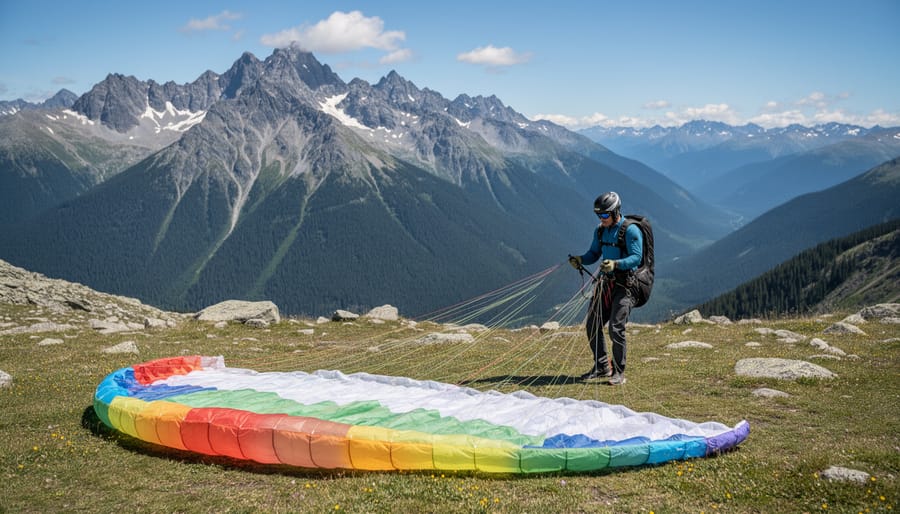
Pemberton sits roughly 130 kilometers north of Vancouver, marking the furthest reach of the West Coast Soaring Club’s supported network. This alpine zone attracts intermediate and advanced pilots who’ve moved beyond tandem flights and initial training, the terrain here demands confidence with active air, thermal management, and mountain weather interpretation.
The appeal is straightforward: higher launch elevations, longer ridge systems, and stronger thermal activity than you’ll find closer to the coast. Pemberton’s valley-and-peak geography creates sustained lift cycles that let experienced pilots cover distance and gain altitude. Where Grouse Mountain offers controlled tandem experiences and Fraser Valley sites provide progression steps, Pemberton rewards pilots who can read shifting wind patterns and handle the complexity of alpine conditions.
This isn’t beginner territory. Pilots flying Pemberton typically hold their certification, understand risk assessment in backcountry environments, and travel with their own equipment. The West Coast Soaring Club coordinates site access and shares current conditions among members, but there’s no commercial operator running tandem flights or gear rentals up here, you’re managing your own launch decisions.
If you’re considering Pemberton after building skills at Lower Mainland sites, connect with the club first. Local pilots know which launch areas are flyable on a given day, how access roads perform in different seasons, and what retrieval logistics look like when you land in the valley. The mountain environment is rewarding, but only when you’ve developed the judgment to fly it safely.
Practical Information: Costs, Check-In, and Safety Requirements
Grouse Mountain’s tandem paragliding costs $269 per person, not including the Mountain Admission fee you’ll pay separately at the base. If you’re booking for someone under 19, plan for a parent or guardian to complete the Release of Liability Waiver on their behalf. The waiver is mandatory for all participants before you step into the flight zone.
Timing matters more than most first-timers expect. Check in at Guest Services at least 1.5 hours before your scheduled flight time, then arrive at the Flight Zone at the top of Peak Chair no later than 30 minutes before takeoff. Mountain transit, gear fitting, and the Ground School briefing all eat into that window, so early is better than rushed.
| Requirement | Details | What to Prepare |
|---|---|---|
| Cost | $269 per person (excludes Mountain Admission) | Budget for admission ticket separately |
| Check-In Timing | 1.5 hours before flight at Guest Services; 30 min before at Flight Zone | Arrive early for transit, gear, briefing |
| Waiver | Release of Liability required; parent/guardian signs for under-19s | Complete before accessing flight area |
| Age Restrictions | Minors allowed with guardian waiver | Bring guardian if under 19 |
Understanding common risks in any outdoor sport helps frame your expectations. Paragliding shares the same respect for conditions and equipment that any mountain activity demands. The Ground School portion covers launch technique, glider construction, basic meteorology, and the weather conditions needed to fly safely. Instructors walk you through each step, but safety basics apply: listen carefully, follow instructions, and speak up if something feels unclear.
Weather can cancel flights on short notice. Mountain winds shift, thermals dissipate, and cloud cover drops unpredictably. Your operator will make the call based on real-time conditions, not your convenience. Build flexibility into your schedule and treat booking as a weather-dependent reservation, not a guaranteed slot.
What Beginners Need to Know Before Your First Flight
Your first paragliding flight is a huge step, and knowing what to expect makes the experience smoother and more enjoyable. Most beginners start with a tandem flight at Grouse Mountain, where an instructor controls the glider while you experience the fundamentals. This lets you gauge your interest before committing to solo training, which requires a full Ground School curriculum covering launch technique, glider construction, basic meteorology, and weather conditions. If you’re serious about flying independently, you’ll eventually need certification through progressive training, but a tandem gives you immediate airtime with minimal prerequisites.
Physically, paragliding isn’t as demanding as you might think. You need enough mobility to run a few steps during launch and land on your feet, but it’s not extreme. The waiver process at Grouse Mountain requires you to acknowledge the inherent risks, participants under 19 need a parent or guardian to sign. Like any outdoor pursuit, you should be aware of risks and understand that weather ultimately dictates whether you fly. Flights can be postponed or canceled if conditions aren’t safe, so build flexibility into your schedule.
Before you book, keep these essentials in mind:
- Book well ahead, especially for summer weekends when demand peaks
- Wear layers and closed-toe shoes; mountain temperatures shift quickly
- You don’t need elite fitness, but you should be comfortable with brief exertion
- Plan backup days in case weather cancels your slot
- Approach launch calmly, nerves are normal, but trust your instructor’s guidance
If you’re treating this as a novice guide to a new discipline, focus on absorbing the Ground School lessons rather than worrying about perfection. The instructors expect beginners, and the tandem format means you’re supported throughout. Show up on time, check in at Guest Services at least 1.5 hours before your flight and reach the Peak Chair launch zone 30 minutes prior, and you’ll set yourself up for a memorable first experience in the air.
Local Tips for Paragliding Around Vancouver
Book your tandem flight well ahead during summer months when weather windows are most reliable and demand is highest. At Grouse Mountain, remember that the $269 tandem price covers the flight and instruction, but not the gondola ride up, you’ll need to purchase mountain admission separately at the base, or you can use an annual pass if you already have one.
Arrive early for your flight window. The 1.5-hour pre-flight check-in at Guest Services isn’t optional, it allows time to complete waivers, get fitted for gear, and ride the Peak Chair to the launch zone with enough buffer for your Ground School session. Weather can shift quickly in coastal mountains, so your instructors need that full window to assess conditions and prepare you properly.
If you want to progress beyond tandem flights, connect with the West Coast Soaring Club early. They maintain access to launch sites across the Lower Mainland, Fraser Valley, and up to Pemberton, which becomes essential once you’re training for your license. The club’s local knowledge about which sites suit different skill levels and current conditions is invaluable for building your progression safely.
Watch the weather patterns, but don’t expect to predict launch days far in advance. Coastal conditions change rapidly, and what looks promising a week out can shift overnight. Most operators will reschedule you if conditions aren’t safe on your booked day, so build flexibility into your plans rather than treating your reservation as guaranteed. Focus on understanding the basics during your tandem experience, how wind direction affects launch, what thermal activity feels like, why certain days get scrubbed, because that knowledge accelerates your learning path if you pursue licensing later.
Frequently Asked Questions
Do I need prior experience to paraglide in Vancouver?
No prior experience is required for tandem paragliding at Grouse Mountain. Your instructor handles all the technical aspects of the flight while you enjoy the experience.
What’s included in the Ground School at Grouse Mountain?
Ground School covers launch technique, glider construction, basic meteorology, and the weather conditions needed to fly safely. This training prepares you for what to expect during your tandem flight.
How far in advance should I book a tandem flight?
Book as far ahead as possible, especially during summer months when demand is highest. Popular time slots fill quickly, and advance booking gives you more flexibility if weather forces a reschedule.
What happens if weather cancels my scheduled flight?
Paragliding depends entirely on safe wind and weather conditions. If conditions aren’t suitable on your scheduled day, operators will work with you to reschedule for another available time slot.
Can I fly solo after doing a tandem flight?
A tandem flight gives you a taste of paragliding but doesn’t qualify you for solo flying. To fly independently, you’ll need to complete a full certification course through organizations like the West Coast Soaring Club, which involves extensive training and supervised flights.
These questions come up regularly from people new to paragliding in the Vancouver area. The tandem experience at Grouse Mountain serves as an introduction, but transitioning to independent flying requires commitment to a structured training program. Most first-time flyers start with a tandem to see if they enjoy the experience before investing in certification courses. Weather variability in the coastal mountain environment means flexibility is essential when booking, particularly if you’re visiting Vancouver specifically for a paragliding experience.