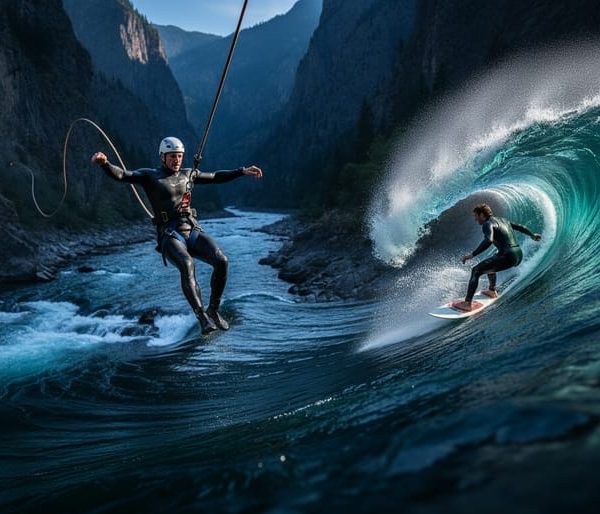
If you’re trying to decide between bungee jumping and river-based extreme sports, the river wins for sustained adrenaline and skill progression, but bungee delivers a sharper, one-time thrill that’s worth experiencing at least once. We’ve spent years navigating rapids, riding standing waves, and chasing flow states on rivers across North America, and we’ve also taken the leap from platforms like Great Canadian Bungee’s 20-story drop at “The Rock” to understand what each experience truly offers.
For our river surfing community, the comparison matters because both activities promise that same heart-pounding rush, but they deliver it in completely different ways. Bungee is a pure freefall that lasts seconds but imprints on your memory forever. River sports build their intensity through repeated attempts, technical refinement, and the unpredictable power of moving water. One is a vertical plunge you survive; the other is a horizontal dance you master.
We’ve found that most river enthusiasts who try bungee come away respecting the sheer terror of that first step off the platform, but they return to the water because rivers offer something bungee can’t: the chance to improve, to read the hydraulics, to feel your body and the current working together. That said, the freefall offers a psychological test that complements river training beautifully. The rebound at sites like Great Canadian Bungee reaches 160 feet, higher than the entire jump height at any other Canadian location, giving you a brief moment of weightless euphoria that rivals the best barrel ride or hole surf.
This guide breaks down how these two adrenaline paths compare across intensity, skill curve, physical demand, and community, so you can decide which fits your thrill-seeking profile right now.
At-a-Glance: Bungee Jumping vs. River Extreme Sports
Here’s a side-by-side snapshot of what separates these two adrenaline paths. Bungee jumping delivers engineered, vertical thrills with safety systems built in, while river sports offer dynamic, skill-dependent challenges that evolve with every session. If you’re weighing a one-time leap against ongoing water mastery, this breakdown clarifies where each experience stands.
| Dimension | Bungee Jumping | River-Based Extreme Sports |
|---|---|---|
| Safety Systems | Engineered harnesses, cords, trained operators | Skill-dependent; reading water, rescue training, protective gear |
| Environment | Fixed platforms, bridges, or towers, controlled setting | Natural river features, rapids, waves, cliffs; constantly changing |
| Skill Requirement | Minimal, courage is the main entry barrier | Progressive learning curve from basics to advanced techniques |
| Season Availability | Year-round at many commercial sites | Seasonal, water-level dependent; peak spring/summer flows |
| Repeatability | Same thrill each jump; limited variation | Endless progression, new waves, lines, and skills to master |
Bungee jumping asks for a single moment of commitment followed by freefall, while river sports demand continuous engagement with shifting water. The vertical plunge happens once per jump; river waves keep coming, each ride different from the last. Cost structures diverge too: bungee operations charge per jump, whereas river access is usually free once you own your gear.
What Each Experience Offers
The Bungee Jumping Experience
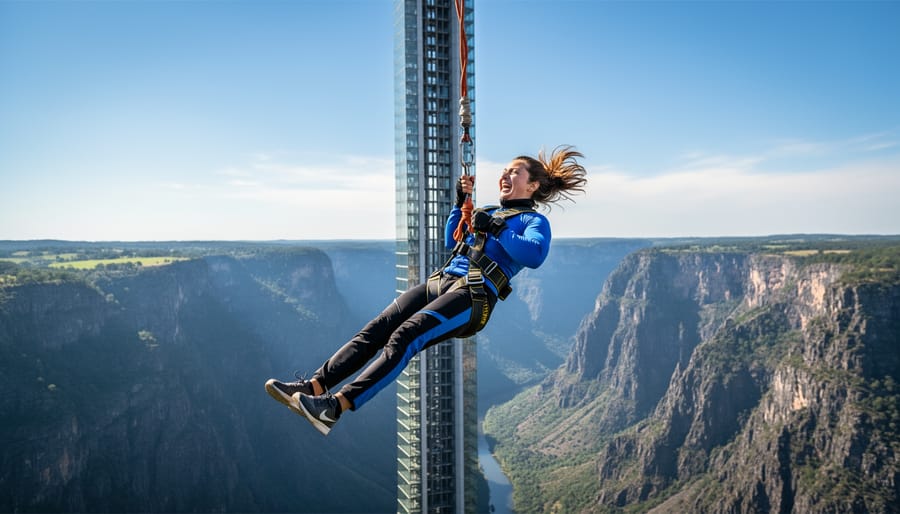
Bungee jumping distills the concept of freefall into its purest, most accessible form. You stand at the edge, whether it’s a platform, bridge, or tower, with an elastic cord secured to your ankles or harness, and then you leap. The first sensation is weightlessness as gravity takes over, pulling you straight down through open air. Wind rushes past, your stomach lifts, and for a few seconds there’s nothing between you and the ground except velocity and trust in the cord. Then the bungee engages, decelerating your fall and snapping you back upward in a smooth, powerful rebound that sends you soaring toward where you started. You bounce several more times, each oscillation gentler than the last, until crew members lower you to the ground or pull you back to the platform.
Most operations offer variations beyond the standard jump. Water-dip jumps let you skim or plunge your head and upper body into a river, lake, or lagoon at the bottom of the freefall before the rebound pulls you back out. Great Canadian Bungee’s site at The Rock delivers a 20-story water dip, the only place in the Americas where you can experience a head and body dip from that height, with a 160-foot rebound that’s higher than the entire jump at any other Canadian location. That rebound alone is taller than many competitors’ full drop, which means you get a second rush on the way back up, not just a gentle swing to a stop.
River-Based Extreme Sports
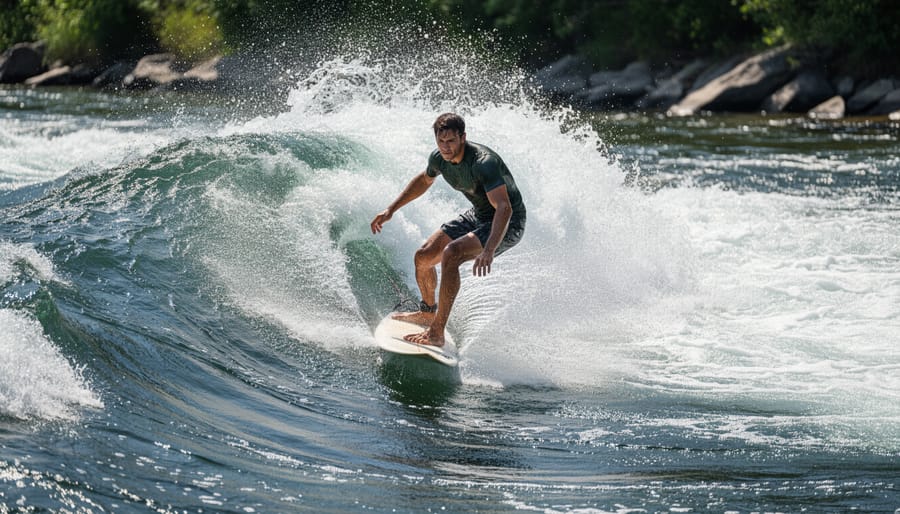
River sports transform natural waterways into playgrounds for progressive, skill-based thrills. Unlike a single leap into the void, these activities immerse you in dynamic environments where every wave, rapid, and current demands real-time reading and response.
River surfing plants you on a standing wave, carving and cutting as the flow rushes beneath your board. You’re not catching a wave, you’re riding one that never breaks, holding position through balance, board control, and wave-reading instincts developed over sessions. The learning curve is steep but rewarding: your first wobbly stance evolves into fluid transitions and aerial tricks as you gain feel for the hydraulic forces at play.
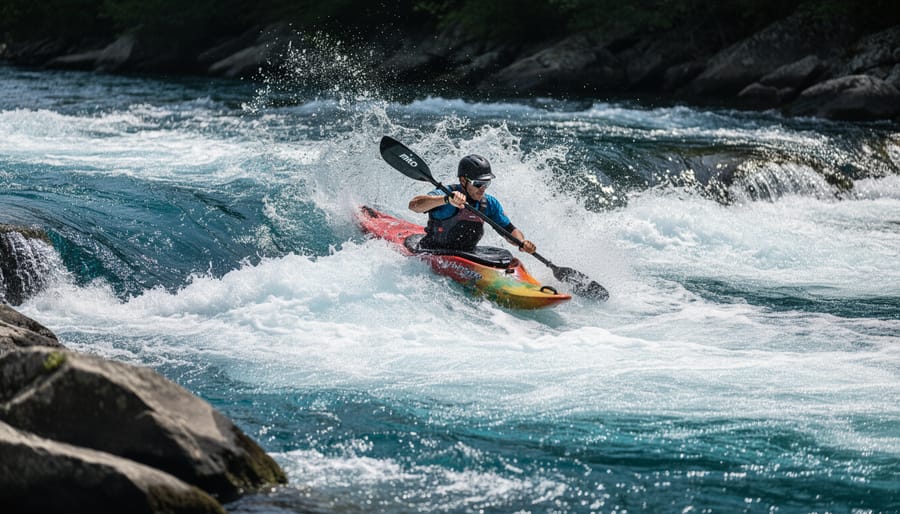
Whitewater kayaking drops you into class II through class V rapids, where you navigate boulder gardens, drops, and holes using paddle strokes and body positioning. The adrenaline builds through commitment, once you’ve read the line and entered the rapid, you’re solving a liquid puzzle at speed, bracing against swirls that want to flip you and punching through waves that crash over the bow.
Cliff jumping into rivers delivers vertical thrills through measured progression. You start at heights you control, building confidence and technique, entry angle, body position, depth assessment, before scaling up. The rush comes from the freefall and the cold plunge, but also from the judgment calls: reading the pool, gauging conditions, knowing your limits.
What ties these together is water immersion and skill progression. You’re not a passenger in a safety system; you’re actively engaged, making split-second decisions, and improving with every run.
The Thrill Factor: How They Compare
Height and Verticality vs. Dynamic Flow
Bungee jumping pins you to a single axis: straight down. When you step off that platform, say, at Great Canadian Bungee’s 20-story drop at The Rock, gravity owns you for one pure, screaming second of freefall before the cord catches and whips you back up 160 feet. It’s a vertical negotiation with physics, repeated in predictable cycles until you settle. Your body knows exactly what’s coming: plummet, rebound, plummet, rebound. The thrill is absolute, but it’s also linear.
River sports throw you into controlled chaos. A standing wave doesn’t drop you; it pushes, pulls, and reshapes under your board or kayak while you read its moods in real time. Rapids shift depending on water levels, rock placement, and the line you choose. One second you’re carving a clean face, the next you’re correcting for a hydraulic trying to flip you sideways. The adrenaline builds through decisions, not just surrender, every move changes what happens next.
Bungee gives you the purest form of altitude rush. River sports give you a living puzzle that fights back.
Speed and Intensity
Speed is where bungee jumping and river sports split into entirely different worlds of adrenaline.
In bungee, you’re hitting freefall velocities, gravity pulls you down at speeds that can exceed 90 km/hr within seconds of leaving the platform. It’s a straight, screaming descent where everything blurs and your stomach launches into your throat. The RIPRIDE zipline at Great Canadian Bungee reaches speeds close to 100 km/hr as riders rocket 1,050 feet across the lagoon, offering a similar aerial rush with a horizontal trajectory instead of vertical drop.
River sports trade that raw freefall velocity for dynamic, variable intensity. Paddling class IV rapids means navigating water moving at 10-15 km/hr, but the intensity isn’t about pure speed, it’s about the relentless succession of obstacles, the precision required to thread narrow chutes, and the immediate consequences of a missed stroke. River surfing a standing wave puts you in constant motion, carving and adjusting as hydraulics shift beneath your board. The rush builds through sustained engagement rather than explosive acceleration.
Bungee delivers speed you can’t control once you jump, you’re a passenger to gravity. River sports hand you speed you must manage every second, reading currents, adjusting angle, committing to lines. One is an instant peak. The other is controlled chaos that demands you stay sharp from put-in to pull-out.
Water Immersion: Dip vs. Full Submersion
The relationship with water fundamentally separates these experiences. When you bungee jump with a water-dip option, like the 20-story head and body dip at Great Canadian Bungee, the contact lasts mere seconds. You plunge toward the surface, touch or briefly submerge, then rebound skyward before your body fully registers the temperature shock. It’s thrilling, yes, but it’s a fleeting kiss with the water rather than a conversation.
River sports flip that script entirely. Once you’re in, you’re committed to full immersion. River surfing means constant water contact, spray in your face, current pushing against your board, the cold seeping through your wetsuit as you paddle back out. We’ve found that understanding surf apnea risks becomes essential when you’re repeatedly diving under waves or holding position in hydraulics. Whitewater kayaking keeps you surrounded by churning water for entire runs, demanding you stay present and responsive while soaked through.
The brief dip of a bungee jump won’t teach you to read currents or manage extended cold exposure. River sports require you to function in water for sustained periods, adjusting your breathing, maintaining core temperature, and staying alert even when fatigue sets in. One is a moment of contact; the other builds your relationship with water over time.
Repeatability and Progression
Here’s one difference that matters if you’re deciding between a weekend at the bridge and a season on the river: bungee jumping delivers the same core thrill every time you jump, while river sports hand you a never-ending ladder of challenge and mastery.
Jump from the same platform ten times and you’ll experience ten identical freefalls, same height, same cord, same rebound arc. The fear might fade as familiarity grows, but the jump itself doesn’t change. Some jumpers chase that feeling repeatedly, treating it like a reset button for perspective or a test of nerve maintenance. Others check the box once and move on, satisfied they’ve proven something to themselves. Either way, the activity peaks at the moment you let go; progression means jumping from higher platforms or trying water-dip variations, not developing a skill set that transforms the experience itself.
River sports operate differently. Your first wave in river surfing feels chaotic and unstable. Six months later, the same wave becomes a canvas where you’re carving turns, reading currents, and linking maneuvers. Whitewater kayaking opens with class II rapids that feel intense; a year of practice puts you in class IV water that would’ve been unthinkable earlier. Each river brings different features, each season alters flow dynamics, and every session teaches you something about reading hydraulics or timing a transition. The progression never stops because the water never repeats itself exactly, and your growing skill unlocks spots and challenges that didn’t exist for you before.
Safety Systems: Engineered vs. Earned
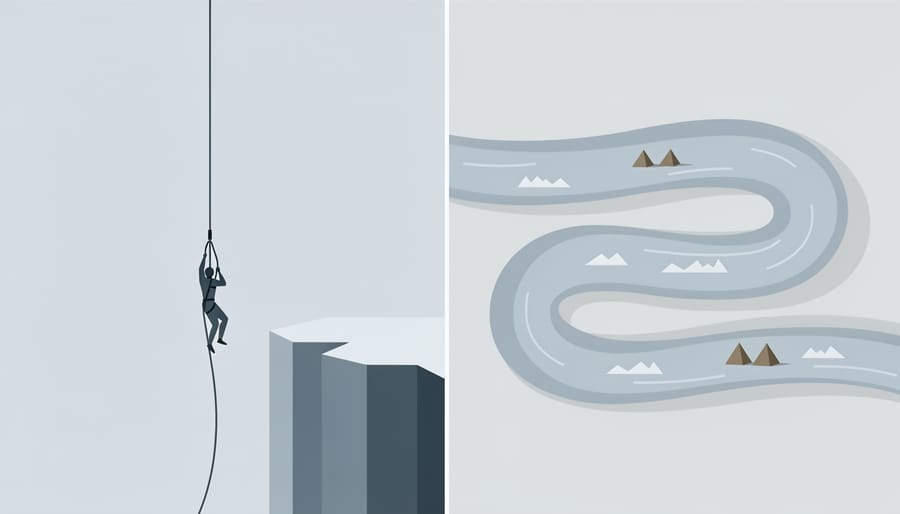
The fundamental difference in how you stay safe during a bungee jump versus a river sport session reveals two distinct philosophies of risk management. When you leap from a bungee platform, your safety depends entirely on engineered systems, tested cords calculated for your weight, redundant harnesses checked by certified staff, and platforms built to standards. The operator controls the variables; your role is to trust the equipment and take the jump. River sports flip that equation: your safety rests primarily on skills you’ve developed yourself, judgment you’ve earned through experience, and your ability to read constantly changing conditions.
Bungee operations invest heavily in redundancy. Cords undergo regular inspection and retirement schedules. Harnesses feature backup systems. Staff follow strict protocols for weight calculation, equipment attachment, and jump clearance. Great Canadian Bungee, for instance, has operated since 1990 with founder Matthew Lawrence establishing procedures refined over decades. The entire system is designed so that even a nervous first-timer with zero knowledge can jump safely, the expertise lives in the operation, not the participant.
River sports demand the opposite approach. Sure, you’ll wear a PFD, helmet, and possibly a wetsuit, but that gear only mitigates consequences; it doesn’t prevent mishaps. Staying safe means learning to spot hydraulics that can trap you, understanding how current speed changes with water level, recognizing when a wave is beyond your skill range, and knowing self-rescue techniques when things go sideways. Our novice river guide emphasizes these progressive skills because no operator can make a river safe for you, you build that safety margin yourself through practice and honest self-assessment.
The river surfing risks don’t disappear once you’re experienced; they just become risks you’ve learned to manage through competence rather than equipment. A bungee cord won’t fail if you’re having an off day, but a river won’t forgive poor judgment regardless of your gear. This isn’t to say one approach is superior, they’re simply different contracts. Bungee jumping offers the thrill without requiring you to become an expert first. River sports ask you to invest time developing the skills that keep you safe while delivering ongoing rewards as your competence grows.
Where You’ll Find Each Experience
Bungee Jump Sites
Bungee jumping sites fall into three main categories: purpose-built platforms, bridge jumps, and tower jumps. Purpose-built platforms offer the most controlled environment, operators construct dedicated launching decks with retrieval systems, often overlooking water or canyons. Bridge jumps use existing infrastructure, typically historic spans over gorges or rivers where operators secure jump lines to the structure. Tower jumps launch from specially designed vertical frames or crane setups, common at festivals or permanent urban installations.
Great Canadian Bungee’s site at The Rock stands as the highest jump in Canada, offering a 20-story water dip into a natural lagoon, the only location in the Americas where you can experience a head and body dip from that height. The rebound reaches 160 feet, which exceeds the total drop height at any other Canadian site. The lagoon setting provides visual drama that bridges and towers can’t match: crystal-clear water below, natural rock walls surrounding the platform. The same site features the RIPRIDE zipline, a 1,050-foot line starting 200 feet above the water, giving visitors a paired aerial experience if one freefall isn’t enough for the day.
River Sport Locations
River sports don’t need man-made towers, they unfold wherever water carves through landscape. River surfing waves appear on permanent features like the Eisbach in Munich or Calgary’s Harvie Passage, where hydraulics create rideable standing waves year-round (water levels permitting). Whitewater kayaking runs span everything from mellow class II floats to expert-only class V gorges, with classic stretches like Colorado’s Arkansas River or BC’s Kicking Horse drawing paddlers when snowmelt swells the flows.
These playgrounds shift with the seasons. Spring runoff transforms gentle streams into thundering torrents, while late summer reveals technical rock gardens and surf waves that disappear under high water. You’ll find surf spots in urban channels, kayak runs through remote wilderness, and cliff jumping pools tucked into backcountry gorges, each location shaped by geology, rainfall, and snowpack rather than construction permits.
The river creates the course, and nature sets the schedule. That variability is part of the draw: the same rapid changes character with every hundred cubic feet per second, keeping even familiar runs fresh and demanding constant adaptation.
Cost and Accessibility Considerations
Bungee jumping follows a straightforward pay-per-thrill model, you show up, pay for your jump, and the operator provides all equipment and safety systems. River sports flip that equation: the rivers themselves are free, but you’ll invest in gear upfront and build skills over time. Each approach suits different adventure budgets and commitment levels.
The cost structures break down differently:
- Bungee jumping charges per jump with no equipment to buy, making it accessible for one-time experiences
- River surfing requires a wetsuit, board, and possibly a helmet, but then you surf free at any accessible wave
- Whitewater kayaking demands the highest gear investment, boat, paddle, spray skirt, PFD, helmet, though rental options exist for beginners
- Cliff jumping into rivers needs only swimwear and water shoes, though safety gear is smart
Season availability tilts toward river sports in most regions. Bungee operations at sites like The Rock run spring through fall when weather permits, closing during winter. Rivers flow year-round in many climates, and dedicated surfers paddle through cold months with proper wetsuits. Snowmelt creates prime whitewater conditions in spring and early summer, while stable flows favor river surfing later in the season.
The learning curve matters for budget planning. Bungee jumping requires no prior skill, trained staff walk you through everything in minutes. River sports demand progressive skill development, which means either self-teaching through trial and error or investing in lessons. A whitewater kayaking course costs money upfront but builds competence that lasts a lifetime. That time investment pays dividends in safety and enjoyment as your skills compound with every session on the water.
Who Should Choose Which Experience
Bungee Jumping Is For You If…
Bungee jumping suits you if you’re chasing a singular, high-impact moment rather than a skill you’ll refine over seasons. It’s perfect for bucket-list seekers who want proof they conquered fear, one leap, photographic evidence, story secured. The experience demands no training, no learning curve, just the willingness to step off. You show up, harness on, jump, done.
Choose bungee if limited time is your reality. River sports ask for progression, repeated sessions, travel to seasonal flows. Bungee jumping delivers peak adrenaline in 30 minutes, including prep. It’s ideal for testing your threshold before committing to disciplines like BASE jumping or whitewater kayaking that carry unforgiving consequences.
Controlled fear is bungee’s strength. Operators manage every variable, cord tension, drop distance, body position. You surrender control and trust the system. River sports, by contrast, demand you navigate common surf hazards and master the river vs ocean distinctions yourself. If hands-on problem solving in cold, moving water doesn’t appeal, bungee’s engineered safety offers adrenaline without the burden of self-rescue skills.
River Sports Are Your Match If…
River sports are your match if you’re drawn to progression over one-time thrills. These activities reward dedication, every session on the water builds your wave-reading instincts, balance, and confidence in ways a single jump never could. You’ll find yourself chasing better lines, mastering tougher rapids, and discovering new breaks as your skills evolve, creating an endless learning curve that keeps the rush fresh.
Community sits at the heart of river sports. You’ll paddle with regulars who share beta about water levels, celebrate your first clean surf on a standing wave, and organize shuttles for whitewater runs. That camaraderie turns individual sessions into shared adventures, building friendships through mutual stoke rather than parallel adrenaline hits.
If you want challenge that adapts to your mood and skill level, mellow float days, technical eddy work, or charging heavy water, rivers deliver that flexibility. You’re never doing the exact same thing twice.
Frequently Asked Questions
The choice between bungee jumping and river sports raises practical questions, especially if you’re considering which adrenaline path suits your goals. Here are answers to the most common comparisons we hear from readers weighing these options.
Which is safer, bungee jumping or river sports?
Bungee jumping relies on engineered safety systems with backup cords, professional operators, and controlled conditions, making serious incidents rare when standards are followed. River sports depend more on your skill level, decision-making, and conditions, safety grows as you learn to read water and practice rescue techniques, but the variables are always changing.
Which requires more skill to start?
Bungee jumping requires almost no prior skill, you simply jump while the crew manages the equipment. River sports demand progressive skill development: you’ll spend time learning to balance on a board, paddle techniques, or how to assess water conditions before you experience the biggest thrills.
Can I do both, or do I have to choose?
You can absolutely enjoy both. Many river surfers have tried bungee jumping as a bucket-list experience, and plenty of bungee jumpers have discovered river sports afterward and built a regular practice around them, they scratch different itches.
Which one is more addictive?
River sports tend to create deeper, longer-lasting engagement because skill progression and community keep you coming back, there’s always a new wave to master or river to explore. Bungee jumping delivers an incredible single rush, but the experience stays largely the same with each jump, so fewer people build a regular practice around it.
Does bungee jumping prepare you for river sports?
Not really in a practical sense, bungee teaches you about managing fear and commitment in a controlled moment, but it won’t prepare your body for paddling technique or reading water. That said, the mental experience of overcoming fear on a bungee platform can build confidence that carries over when you’re deciding whether to drop into a rapid.
The core difference comes down to duration and depth. Bungee jumping gives you an intense, compressed moment of freefall, a vertical plunge that’s over in seconds, followed by the rebound. River sports unfold over minutes or hours, demanding constant engagement as you respond to shifting currents, adjust your body position, and make split-second choices. One is a peak experience; the other is a flow state.
If you’re curious whether the rush translates, consider this: bungee jumping might give you perspective on what your nervous system can handle under pressure, but river sports will teach you to stay calm and effective while that pressure is sustained. Neither experience diminishes the other, they simply reveal different edges of what thrill-seeking can feel like, and both have earned their place in the world of calculated risk and reward.
Both bungee jumping and river-based extreme sports deliver genuine adrenaline rushes, they just take different paths to get your heart pounding. Bungee gives you the ultimate vertical moment: one leap, one freefall, one unforgettable story. River sports offer something equally thrilling but stretched across seasons and skill levels, the rush of reading a rapid, carving a standing wave, or nailing a line you’ve been working toward for months.
If you’re a river surfer curious about how freefall compares to the pull of current, trying a bungee jump can shift your perspective on what fear and control mean. And if you’ve just ticked bungee off your bucket list and loved the adrenaline hit, river sports give you a way to chase that feeling regularly, building skill and connection with every session.
Neither experience is better, they’re different tools in the thrill-seeker’s kit. At Riverbreak, we celebrate both the leap and the paddle, the one-time bucket-list moment and the lifelong pursuit. Whether you’re drawn to the controlled plunge or the unpredictable flow, there’s a place for you in this community. Come share your stories, ask questions, and find your next adventure.